Fire Ants


One of the most common types of fire ants in the United States today is the red imported fire ant. This invasive, foreign ant was brought to the United States from South America by accident in the 1930s. These aggressive, competitive pests continue to spread and now infest about one-fourth of the United States. They damage lawns and create unsightly mounds, but they also attack when disturbed and deliver painful, burning bites to people and pets. Established underground colonies can house hundreds of thousands of fire ants.
Identification: Fire ants are small- to medium-size red and black ants that vary significantly in size. Most other types of ants are fairly consistent in size, but fire ants measure from 1/16 to 1/4 inch in length. Two prominent, bump-like nodes between their thorax and their abdomen distinguish them from other ants.
Signs/Damage: Unless you're unfortunate enough to experience a bite, the first sign of fire ant problems will be a fluffy mound that lacks a central opening. Fire ants prefer sunny locations and sandy soils. Surrounding turf becomes thin and unsightly. If you are bitten, fire ant bites are painful. The bite site produces itchy, burning pustules that can last a week or more.
Control: Effective fire ant control involves full yard treatments and targeted treatments of fire ant mounds. GardenTech® brand offers several highly effective products that kill fire ants by contact and provide 6 month fire ant control:
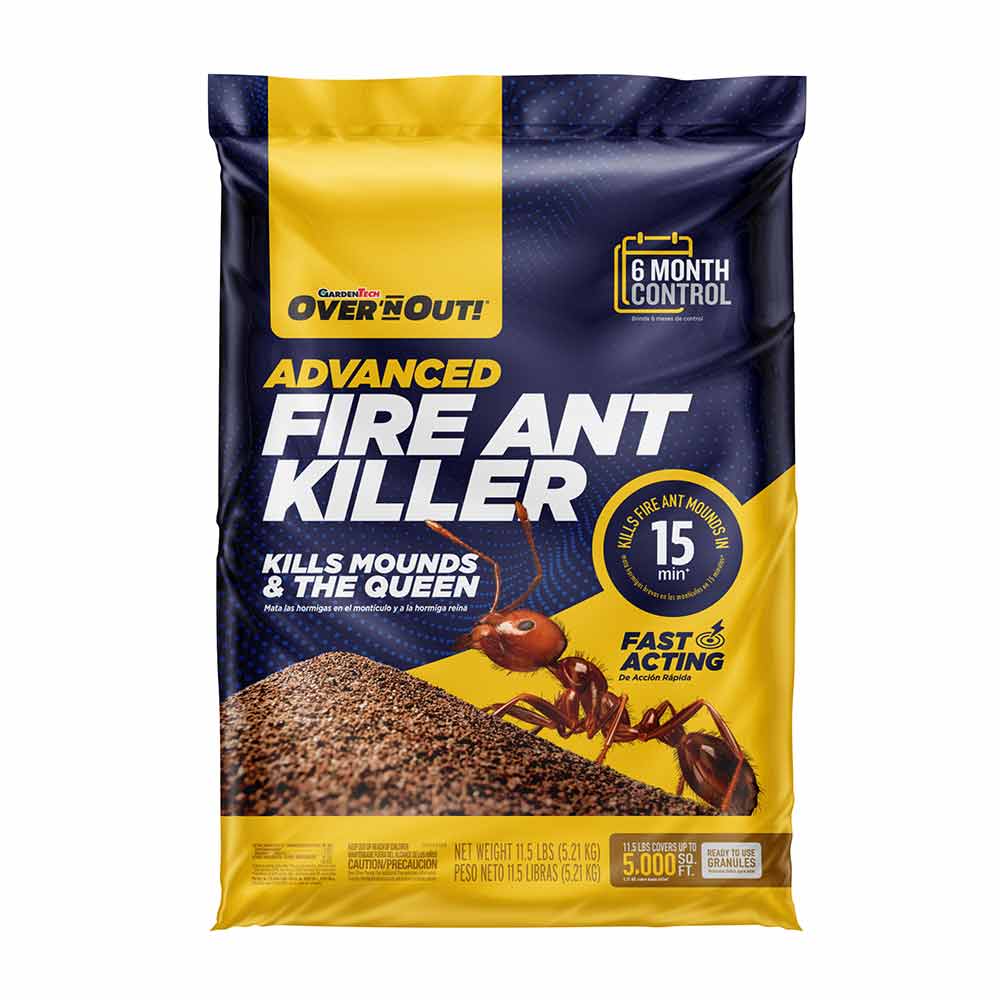
- Over'n Out!® Advanced Fire Ant Killer provides highly effective treatment for fire ants in lawn and non-edible garden areas. Apply the granular product with a lawn spreader, and water according to label instructions. This product starts killing fire ants on contact, killing mounds in 15 minutes and colony queens within 24 hours. It keeps protecting against new invasions for up to six months
- Sevin® Insect Killer Lawn Granules treats fire ants in lawns, but also treats these pests and their mounds in vegetable and fruit gardens. Broadcast the ready-to-use granules for thorough, uniform cover or use 1/2 cup per mound treatment. Water immediately, according to label instructions. This products controls ants within four hours and keeps protecting for up to three months. Follow label guidelines for required intervals between treatment and harvest of edible crops.
Tip: Fire ants are most active during moderate weather in spring and fall. Treat during early morning and early evening while fire ants are foraging to maximize your impact.
Always read product labels and follow the instructions carefully, including guidelines for pre-harvest intervals on edible crops.
GardenTech is a registered trademark of Gulfstream Home and Garden, Inc.
Over'n Out! is a registered trademark of TechPac, LLC.
Sevin is a registered trademark of Tessenderlo Kerley, Inc.
Photo Credit:
"Solenopsis invicta - fire ant worker" by Alex Wild at University of Texas (Public domain)
"Red imported fire ant (Solenopsis invicta) Buren" by USDA APHIS PPQ - Imported Fire Ant Station (Bugwood.org) licensed under CC BY 3.0 US
"Texas Fire Ant Nest in October" by Robert Nunnally licensed under CC BY 2.0
Is this not your insect?
View all Insects