
Q : What is Sevin?
Q : How is Sevin produced?
Q. What is the active ingredient in Sevin?
Q. How does Sevin control insects?
Q : Which product works best to control Japanese beetles?
Q. When is the best time to apply Sevin?
Q. How many tablespoons are in an ounce?
Q. Will Sevin control all insects?
Q. Can I apply on a new sod/newly seeded areas?
Q. I've used up my Sevin Ready-To-Use spray. Can I use the Sevin concentrate as a refill/
Q. Can the Sevin Dust be mixed with water?
Q; Will Sevin Lawn Insect Granules kill adult Japanese beetles?
Q: What plants cannot be sprayed with Sevin?
Q: Can I apply Sevin to my vegetables after they have formed on the vine/plant?
Q: Can Sevin be used on herbs?
Q: How long does Sevin need to be on a plant before it rains?
Q: Will Sevin prevent insects from attacking my plants?
Q: How long before I can eat my vegetables after spraying?
Q. Can I use Sevin indoors?
Q. Can I use Sevin on my carpet for insects?
Q. Can I use Sevin on myself?
Q. Can I use Sevin on my household plants?
Q. Will Sevin stain my siding/sidewalks/vehicles/car ports/driveways/etc.?
Q. Can I spray my animal with Sevin?
Q. Once I spray Sevin on my lawn, how long do I have to wait until my children
and pets can go out to play in the yard?
Q. Is it ever too cold/hot to apply Sevin?
Q. How do I store Sevin?
|
|
| |
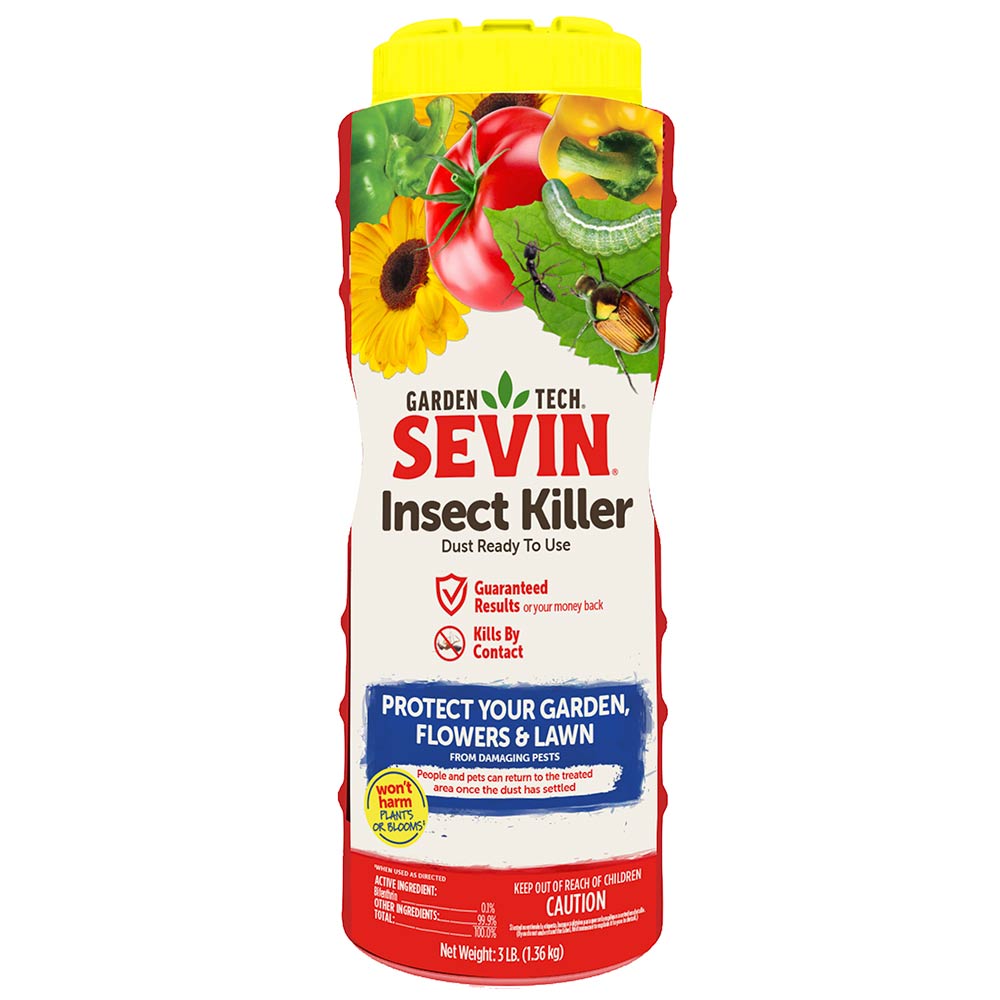
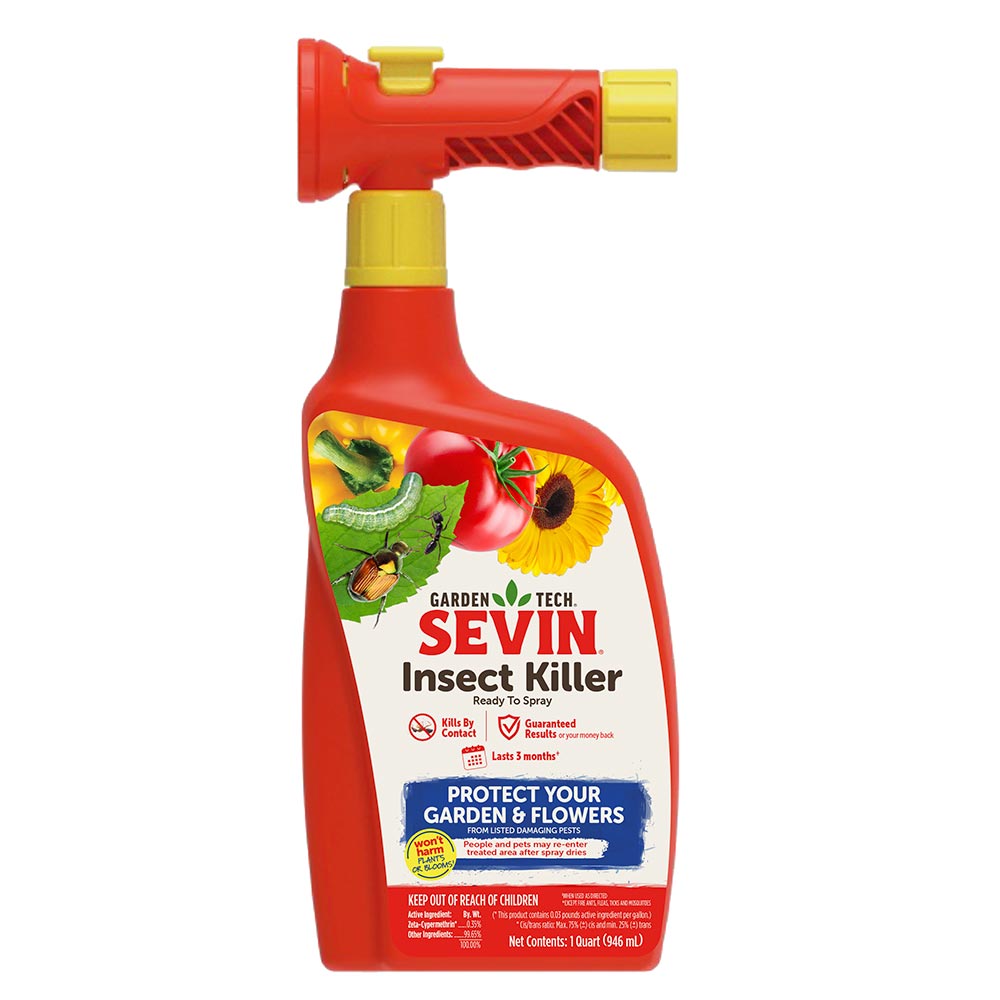
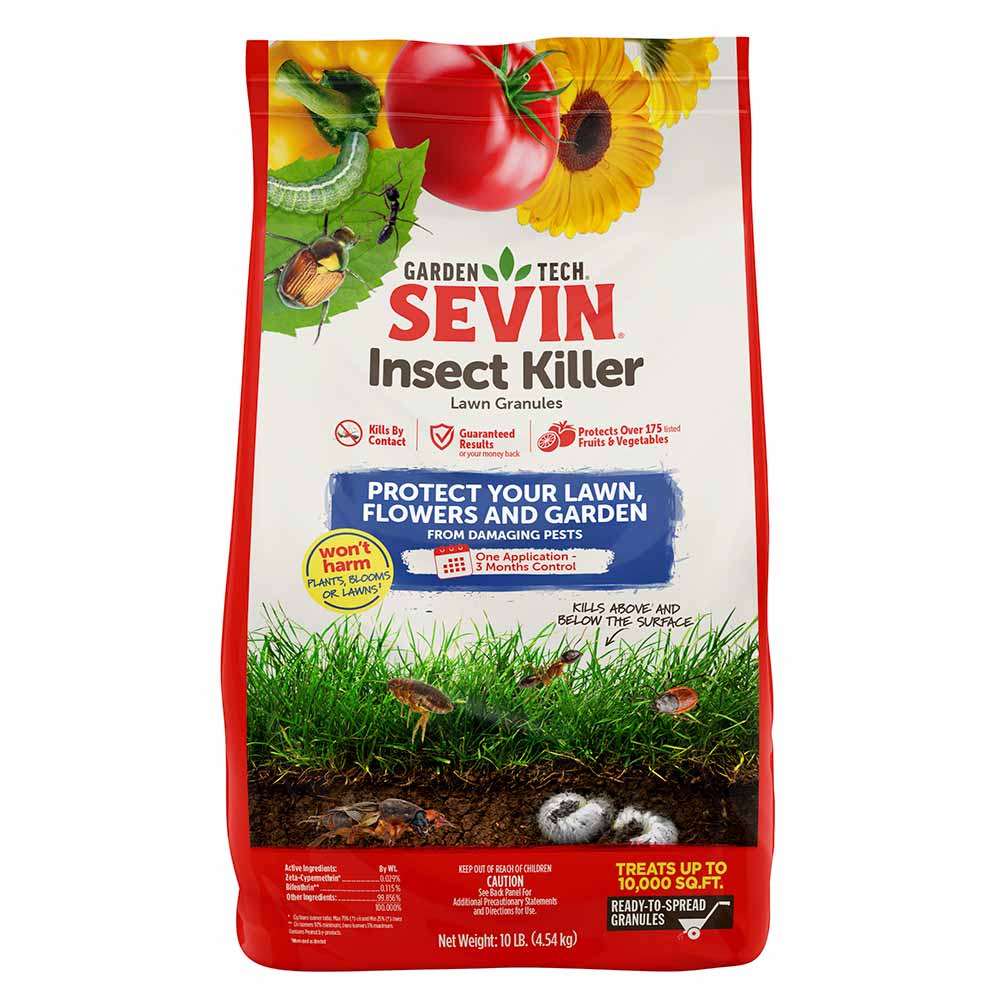
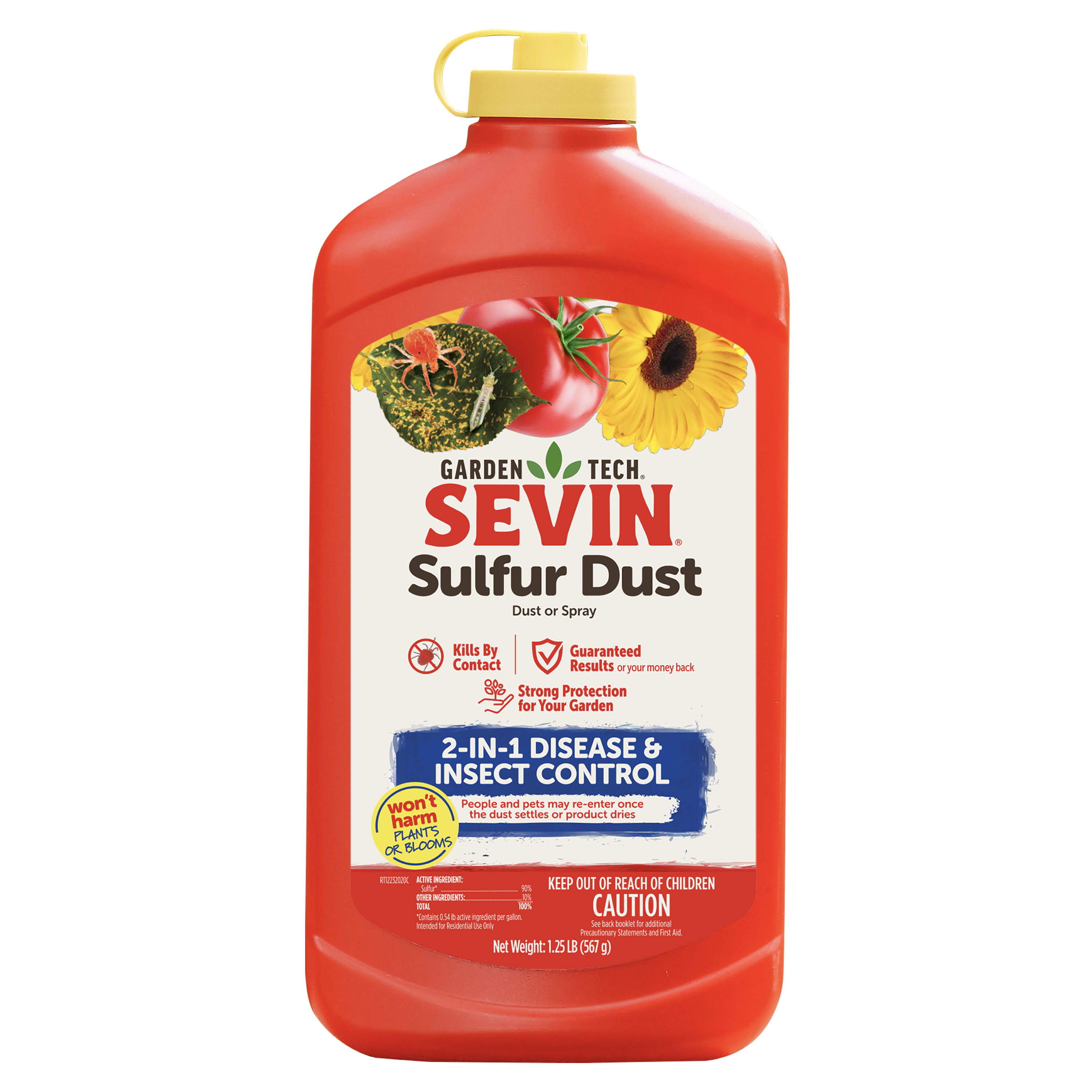
A: GardenTech® Sevin containing carbaryl is the most effective insecticide on the market today. Consumers and professionals have trusted Sevin for nearly 40 years to control a wide variety of insects. Sevin provides the consumer with the broadest spectrum of control, killing more insects in more places versus other leading brands.
|
|
|
| |
A: Sevin is available in a dust, granular, concentrate, ready-to-use, and hose end formulations.
|
|
|
| |
A : The active ingredient in Sevin is carbaryl.
|
|
| |
A: Sevin has a dual mode-of-action — it works on contact and through ingestion. Sevin is non-systemic, which means it does not penetrate plant tissue — it stays on the outside. After controlling the targeted pest, Sevin is easily broken down in the environment. Find Your Pest.
|
|
| |
A : Sevin is one of the most effective and recommended insecticides to use for control of damaging Japanese beetles. Sevin is also very effective in the control of ticks that transmit Lyme disease.
|
|
| |
A : Sevin® can be used throughout the growing season, right up to harvest. For more details, refer to the section Product Information.
|
|
| |
A: 2 tablespoons equal 1 ounce.
|
|
| |
A: Sevin controls more than 100 insects. To view a complete listing of insects controlled, please refer to the section: Find Your Pest.
|
|
| |
A: You can apply Sevin to new sod or newly seeded areas. Just keep in mind that if you have to water any of our product in or are applying a heavy liquid solution, you may wash away any seed that has not yet taken root.
|
|
| |
A: The products are the same so you may use the concentrate as a refill.
|
|
| |
A: Sevin dust formulation is not intended to be mixed with water. It should only be used dry
|
|
| |
A: No, but Sevin Lawn Insect Granules will kill the Japanese beetle larvae (white grubs) that live in the ground.
|
|
| |
A: We recommend not spraying Boston Ivy, Maidenhair Fern, Virginia Creeper, Virginia Pines and Sand Pines. |
|
| |
Yes. Just make sure to follow the pre-harvest interval (PHI) before harvesting the treated vegetable |
|
| |
A: Sevin is not registered to be used on herbs. |
|
| |
A: Sevin is not rain-proof. Sevin will wash off when it rains or any overhead watering occurs. You should reapply Sevin once the plants are dried. |
|
| |
A: No. Sevin is a contact insecticide that works through ingestion and by contact. |
|
| |
| CROPS |
PHI* |
APP* |
| Asparagus |
1 |
3 |
| Sweet Corn |
2 |
8 |
| Broccoli, Brussels sprouts, Cabbage, Cauliflower, Kohlrabi |
3 |
3 |
| Eggplant, Tomato |
3 |
4 |
| Black-eyed peas, Crowder Peas, Cowpeas, cucumber, green beans, lima beans, melons, navy beans, okra, peas, peppers, pumpkin, snap peas, southern peas, turnip roots |
3 |
6 |
Carrots, garden beet roots, horseradish, parsnips, potatoes, radishes, rutabagas, salsify roots, turnip roots |
7 |
3 |
Sweet potatoes |
7 |
4 |
Celery, Chinese cabbage, collards, dandelion, endive (escarole), garden beet tops, Hanover Salads, Head lettuce, kale, leaf lettuce, mustard greens, parsley, salsify tops, Swiss chard, turnip tops |
14 |
3 |
Peanuts |
14 |
5 |
Dried beans |
21 |
6 |
*PHI refers to the minimum interval in days that must be observed between the date of the last application and the date of harvest.
*APP refers to the maximum number of applications per season.
|
|
|
| |
.A: Sevin is registered for outdoor usage and should not be applied indoors, on bedding, or in vehicles.
|
|
| |
A: Sevin is registered for outdoor usage and should not be applied indoors, on bedding, or in vehicles.
|
|
| |
A: Sevin is registered for outdoor usage and should not be applied indoors, on bedding, on a person, or in vehicles.
|
|
| |
A: Sevin can be used on household plants as long as you take the plants outside while spraying and bring them back in once they have dried.
|
|
| |
A: Sevin should be sprayed only on items such as plants, trees, soil, and lawns. Any man-made material should not be sprayed with Sevin.
|
|
| |
A: GardenTech Sevin products are not recommended for use on animals. Please see the specific product label for precautions and advisories.. Sevin Labels
|
|
| |
A: Once you spray the chemical on the lawn, wait for the grass and the ground to dry, and then reenter the yard.
|
|
|
| |
A: YES. These guidelines are there for the safety of you and those around you. Everyone has a different reaction to chemicals and following precautions limits your chances of having a reaction. |
|
| |
A: It is never a good idea to mix two different chemicals together at one time. You can apply back-to-back treatments, just take into consideration that if you are applying two liquid products to a plant, the first application will be washed away. In this case, it would be best to treat the most important problem first, wait about a week, and apply the second chemical. |
|
| |
A: When temperatures are below 55° or above 85° it is not recommended to use the chemical. Generally, do not spray during the hottest part of the day; this will prevent possible scorching of plants. |
|
| |
A: When storing any Sevin formulation, follow these guidelines:
- As with any chemical, you need to store Sevin out of the reach of children, preferably in a locked storage area.
- Keep Sevin away from any heat sources such as a heater of dryer to prevent heating and melting of the container.
- Store the products at room temperature at all times.
- If the product does freeze or boil, do not use the product again. We cannot guarantee that the product will work because of the alteration of the chemical due to the extreme temperature changes.
- Store Sevin in its original container or packaging.
|