Blister Beetles
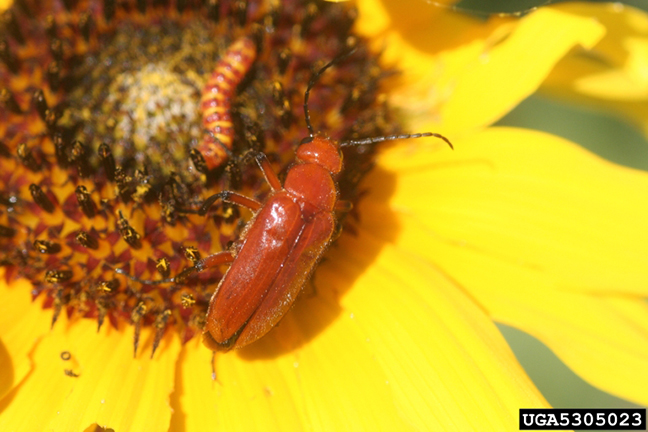
Blister beetles are widespread pests, with hundreds of species living in North America. They're especially common in the southern and eastern United States. Although they often forage in vegetable crops, it's not their feeding habits that cause the greatest concern. The biggest danger lies in a toxin they produce called cantharidin, which can be lethal to livestock — especially horses.
Blister Beetle Identification
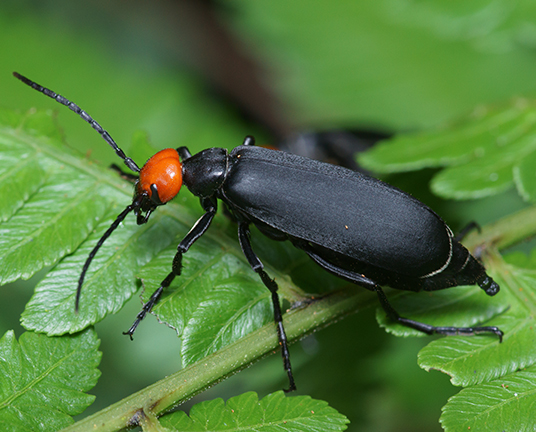
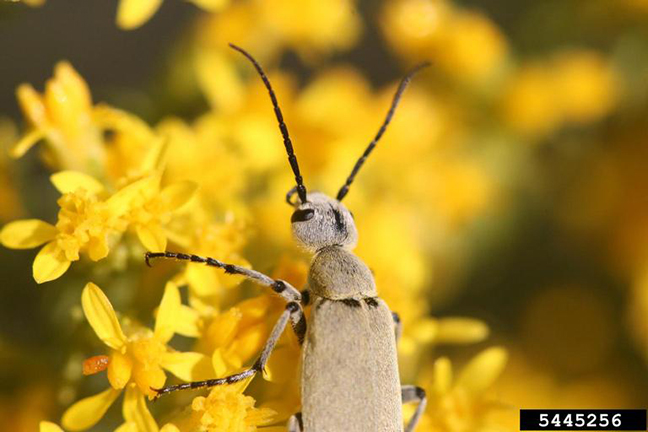
Blister beetles have long or cylindrical bodies, and their heads are round or rectangular. Their "neck" (called a pronotum) is narrower than their head and body. Their antennae often appear beaded, and their rounded wings tend to curve around their bodies.
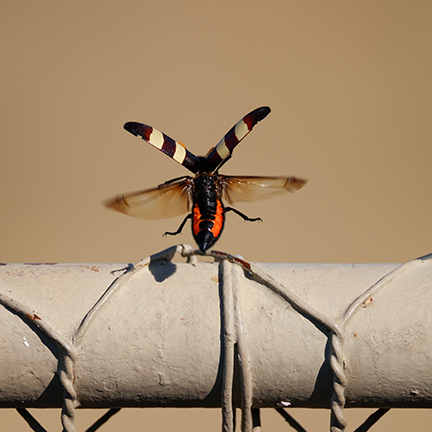
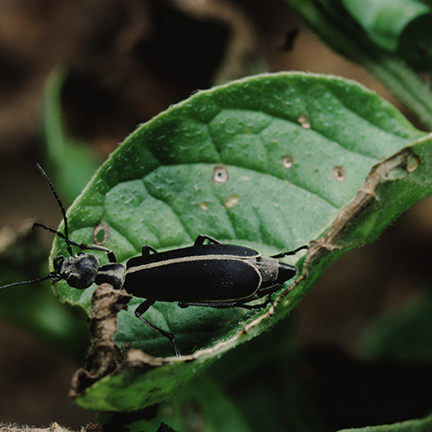
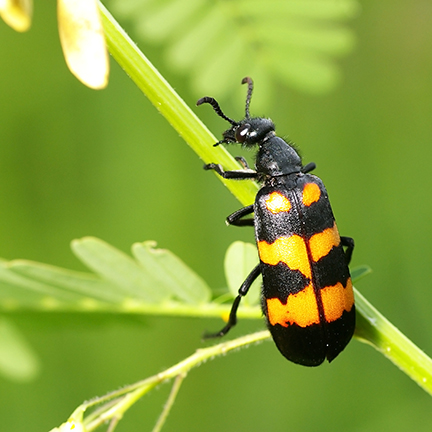
They come in a wide variety of colors or patterns. Many species are dull black or brown, but some may have yellow, red or orange markings. They might even be iridescent blue, bronze or mostly yellow, red or orange in color.
For example, the most common species in Oklahoma — the striped blister beetle — has a black-and-orange striped body. In contrast, the spotted blister beetle is yellow with large black spots. And the gray blister beetle is mostly dull gray in color.
Blister beetles can be shorter in length than 1/4-inch or as long as 2 1/2 inches, but most are about 1/2- to 3/4-inch long. If you handle a blister beetle, you'll likely end up with blisters on your skin from the toxin.
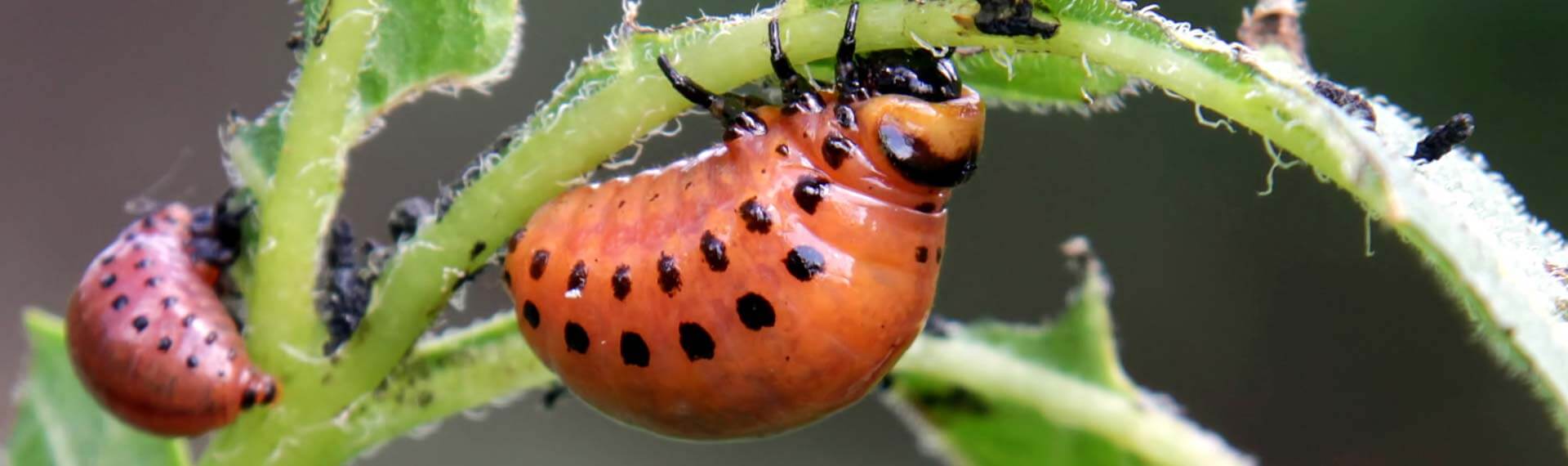
Their larvae go through multiple grub-like stages, but typically have legs and antennae when they hatch. Some species grab onto bees and are carried to their hives, where they feed. Others eat grasshopper eggs. The larvae molt in stages and become more and more grub-like and sedentary over time. Most overwinter in the soil and then emerge as adults in the spring or summer.
Blister Beetle Signs or Damage
Adult blister beetles eat flowers, nectar, pollen or leaves, depending on the species. You might find them on plants like sunflowers, potatoes, alfalfa, peanuts, soybeans, ornamental plants, garden vegetables and many others.
They usually feed in groups or swarms, which can make them easy to spot. And the larger the swarm, the more they will defoliate and damage crops. The damage is often limited to a specific region of a crop or on the edges of fields. You'll usually find them in the late spring or early summer.
While they can damage any crop they infest, one of the biggest concerns is when they feed on alfalfa that's harvested into hay. When horses eat that hay, they can be poisoned by toxins from the dead beetles. This can lead to a blistered esophagus and stomach, damage to the kidney and heart or even death. Some blister beetle species emit such a potent toxin that a 550-pound horse can die from only eating 50 beetles. Harvesting before the alfalfa blooms can help reduce blister beetle numbers.
How to Control Blister Beetles
Effective treatment of blister beetles is the best protection for your crops and your livestock. GardenTech® brand offers highly effective outdoor controls that kill blister beetles:
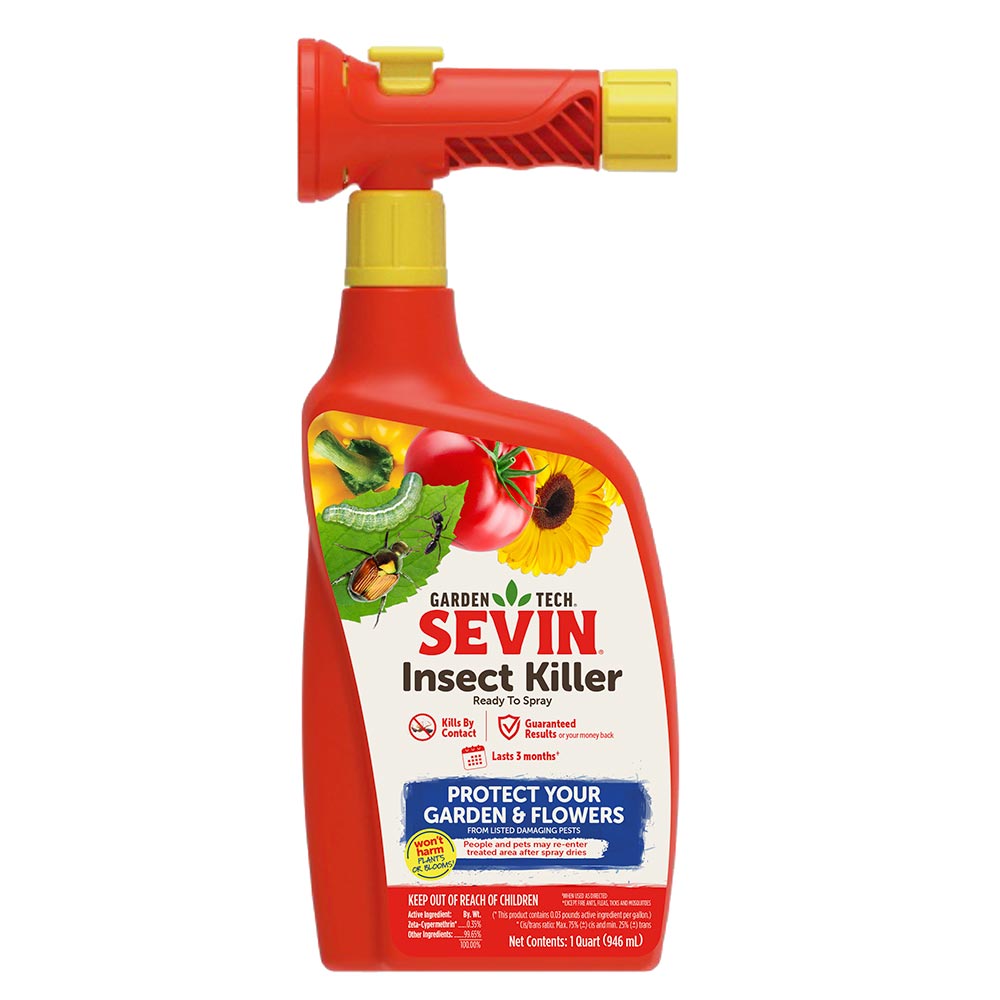
- Sevin® Insect Killer Ready to Spray kills blister beetles (and more than 500 other insect pests) by contact and keeps protecting for three months.+ You can use it on lawns, vegetables, flowers, fruits, trees and other outdoor plants and surfaces. Just shake well, attach the hose to the spray bottle, turn on the water and spray where you see or expect to see insect damage. Read the label for specific directions for the plants or area where you're spraying.
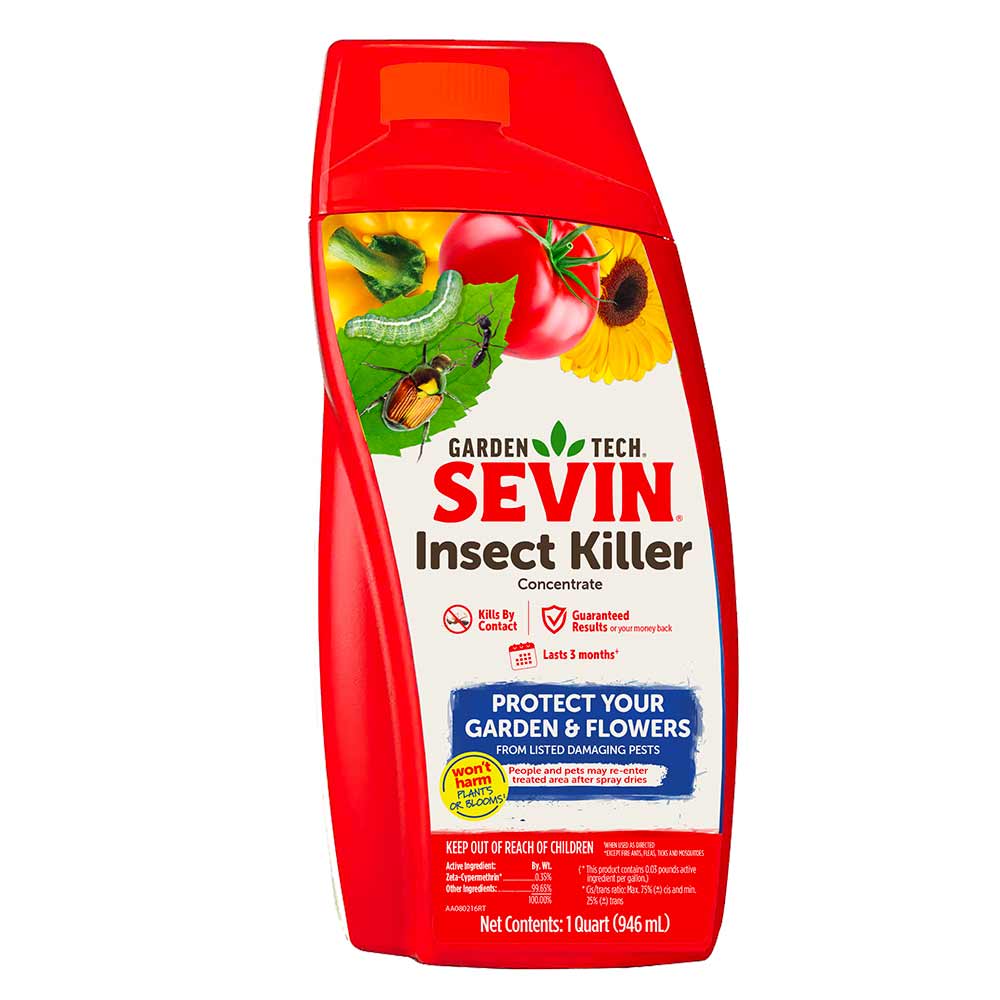
- Sevin Insect Killer Concentrate kills more than 500 insect pests, including blister beetles, by contact and then continues protecting for three months.+ You can use this concentrate on your lawns and outdoor plants like vegetables, flowers, fruits and trees. Just shake well, pour a mix of concentrate and water into a sprayer based on the label's instructions and then spray. Read the label for specific directions for the plants or area where you're spraying.
Blister Beetle Control Tip: Many species of blister beetle larvae eat grasshopper eggs. If you control grasshoppers, you'll indirectly reduce the number of blister beetles.
+Except fire ants, fleas, ticks, and mosquitoes.
Always read product labels thoroughly and follow instructions, including guidelines for listed plants and pests, application frequencies and pre-harvest intervals (PHI) for edible crops.
Sevin is a registered trademark of Tessenderlo Kerley, Inc.
Photo credits:
"Blister beetle closeup" Whitney Cranshaw, Colorado State University, Bugwood.org (CC BY 3.0 US)
"Blister beetle with larvae" Whitney Cranshaw, Colorado State University, Bugwood.org (CC BY 3.0 US)
Is this not your insect?
View all Insects