How to Grow and Care for Blueberries

There's no denying it: homegrown blueberries offer unsurpassed freshness and flavor. Growing blueberries in a home garden is an extremely satisfying endeavor that ultimately provides a bountiful harvest of antioxidant-packed berries. But growing blueberries is not without challenges. Blueberry plants thrive in acidic soil, and it isn't always easy to meet those needs. But with a little know-how, you can grow and care for blueberries that will produce delicious harvests for years to come.
- Understanding Types of Blueberries
- Planting Blueberries in the Garden
- Planting Blueberries in Containers
- Fertilizing and Watering Blueberries
- Managing Blueberry Pests and Diseases
- Enjoying Your Blueberry Harvest
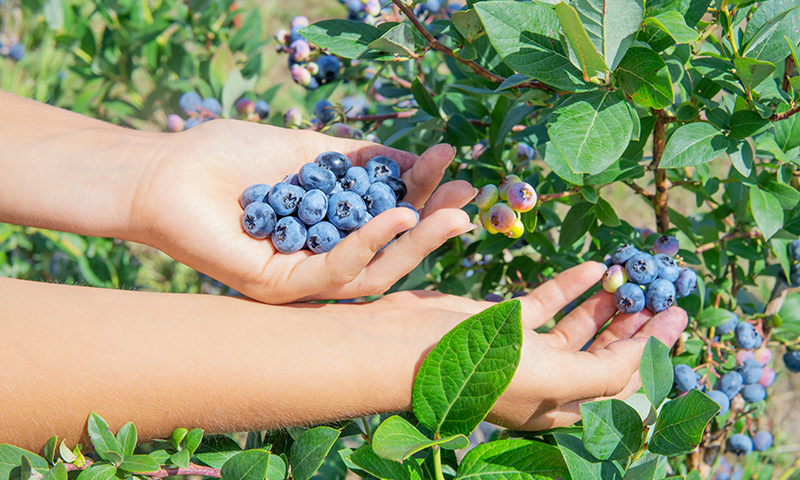
Blueberries come in two main types to give you options for planting.
Understanding Types of Blueberries
Blueberry bushes come in two main types: lowbush and highbush. This means no matter where you live, you're likely able to grow your own blueberries.
Lowbush varieties tend to produce smaller, sweeter berries, while highbush berries are often larger but may be slightly less flavorful. But, both types produce tasty, beautiful berries. The type you choose may depend on your location and your zone. Highbush varieties are divided into northern and southern types that vary in their cold-hardiness, and lowbush varieties are considered cold-hardy.
Lowbush varieties stand about two feet high and spread out to create a large blueberry patch. You'll see this behavior displayed in blueberry bushes in the wild. Highbush blueberries are more like a shrub than a bush and reach up to six feet tall. In either case, where you plant them is important. These perennial plants could likely occupy space in your garden for decades. So think about the mature bush when plotting out your space.
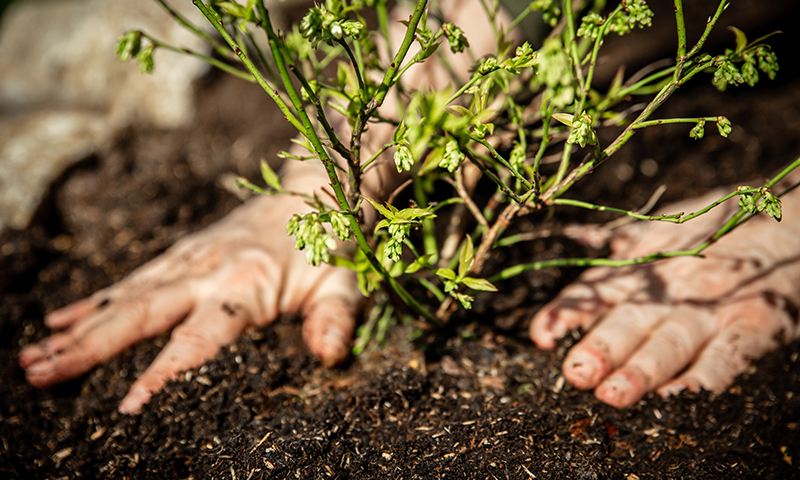
A beautiful blueberry bush is an attractive addition to any yard or garden.
Planting Blueberries in the Garden
Unlike some perennials, blueberry plants don't die back all the way to the ground in fall. Instead, blueberries grow on bushes or shrubs with canes or branches.
Be sure to allow plenty of space around your blueberry bush when planting. Place individual plants at least 5 feet apart. When digging a hole to plant your blueberry bush, aim for the same depth as the pot it was in, but twice as wide.
If you have the space, consider planting more than one variety of blueberry. This diversity provides better pollination and may result in a better yield of larger berries.
Soil should be acidic and ideally moist yet well-drained. You may need to amend it with peat moss, compost or topsoil to achieve the type of soil blueberries love while maintaining the proper acidity.
Mulching is often recommended after planting, as this helps keep the soil moist and helps promote the development of a quality root system. Don't mulch within several inches of the stem in any direction.
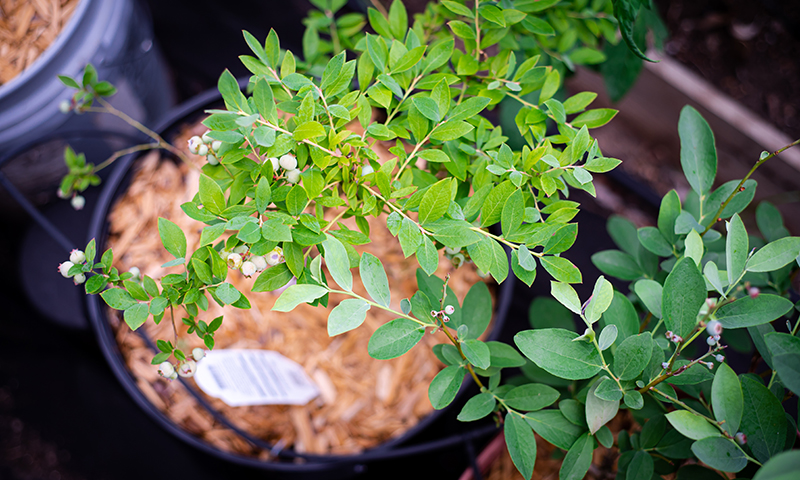
Growing blueberries in containers is great if your outdoor space is limited.
Planting Blueberries in Containers
If you live in an apartment or have a postage-stamp-sized yard, growing your own blueberries isn't out of reach. Blueberries can be grown in a container. However, you need to consider a few additional things when growing your blueberry bush in a container. You'll need to water more frequently because containers dry out quickly. But if you have a sunny patio and a bit of available space, your container-grown blueberry plant could thrive. It can also be easier to provide the acidic soil necessary to grow blueberries when working with a container rather than a garden bed.
Choosing the right variety is key to success with a container-grown blueberry bush. Look for a lowbush variety that will stay small, or even a half-highbush variety (a lowbush x highbush hybrid). Container-grown blueberries are more susceptible to cold temperatures, so be sure to bring the container indoors for winter or provide some other means of protection when temperatures drop.
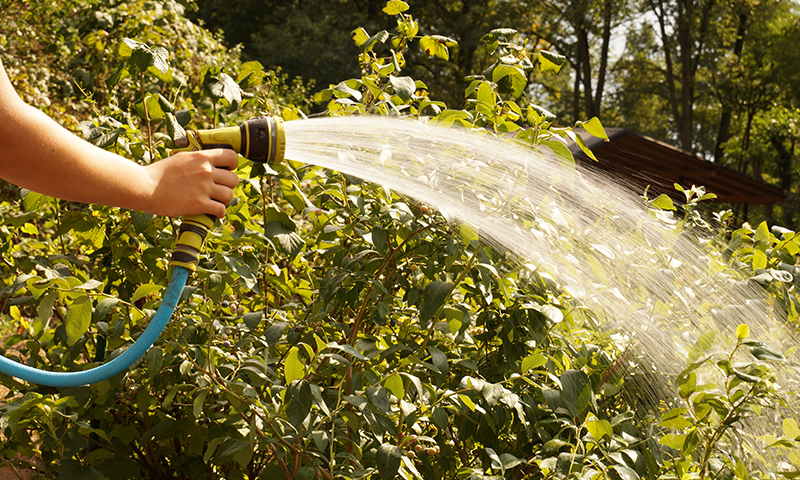
Regular watering is essential for the health of blueberry plants.
Fertilizing and Watering Blueberries
Whether you plant your blueberry bushes directly in the ground or in containers, it's important to ensure the soil has the correct pH for growing blueberries. Unlike many garden plants that require a neutral soil pH of around 7, blueberries are acid-loving plants and want a pH in the range of 4.5 to 5.5. A soil testing kit can help identify the current pH of your soil.
If you need to amend the soil, do so prior to planting. Sulfur is typically used as a raw material that soil microbes can convert into sulfate, which lowers the soil pH. Keep in mind, this is a slow process and takes time.
Blueberries have a fairly shallow root system, so regular watering is important, about two inches per week. The roots shouldn't dry out, so the soil should remain moist, not soggy. As a reminder, you'll be watering your container-grown blueberries more frequently.
Blueberry plants usually benefit from fertilizing, but only at certain times of the year. Avoid fertilizing when the bush is dormant. Instead, fertilize once in spring (just before or just after the leaves appear) and possibly again several weeks later. Choose a fertilizer formulated for acid-loving plants.
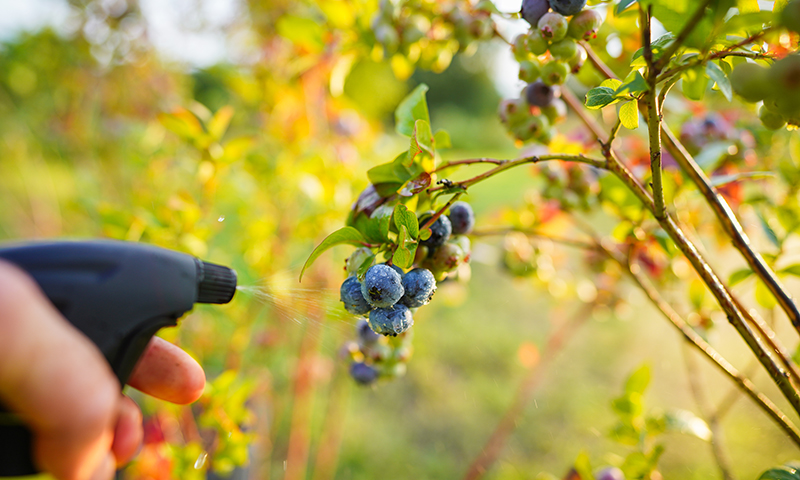
Blueberry plants need your help to combat pests and diseases.
Managing Blueberry Pests and Diseases
Proper care can help keep your blueberry bushes strong and naturally resistant to pests and diseases. Even the best gardeners sometimes struggle with a few common problems. Sevin® products can be a piece of your gardening arsenal to keep your blueberry bushes producing well.
Blueberry bushes can be susceptible to some pests and diseases. Powdery mildew is a common blueberry disease that attacks the plant's leaves during the summer. Apply Sevin Sulfur Dust at the first sign of damage to help combat this common issue while not harming shrubs or blooms.
Common insects that attack blueberries include aphids, yellow jackets and Japanese beetles. A sprayable product like Sevin Insect Killer — in either ready to spray or concentrate formulas — is fast working on over 500 listed pests. It lasts for three months* and won't harm plants. If you need to protect a larger area, broadcast Sevin Insect Killer Granules around your garden for further protection. Be sure to check the pre-harvest intervals (PHI) between applying these products and harvesting the fruit.
If you're spraying for either pests or disease, be sure to water at the appropriate times for best results and to avoid washing away the product before it is absorbed.
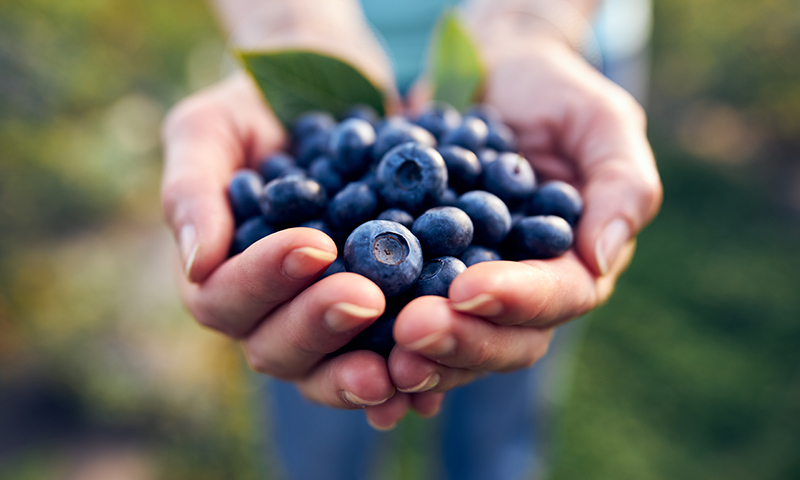
Over time, your blueberry bushes will produce abundant harvests for you to enjoy.
Enjoying Your Blueberry Harvest
Patience is a virtue when it comes to growing blueberries. It takes time for the plants to establish themselves enough to produce a good crop of berries. So, don't expect much from your bushes for the first couple of years. Once your plants are established and producing well, you can enjoy blueberries straight from the bush or baked into delicious muffins or pies.
* except fire ants, fleas, ticks and mosquitoes
Always read product labels thoroughly and follow instructions, including guidelines for listed plants and pests, application frequencies and pre-harvest intervals (PHI) for edible crops.
GardenTech is a registered trademark of Gulfstream Home and Garden, Inc.
Sevin is a registered trademark of Tessenderlo Kerley, Inc.